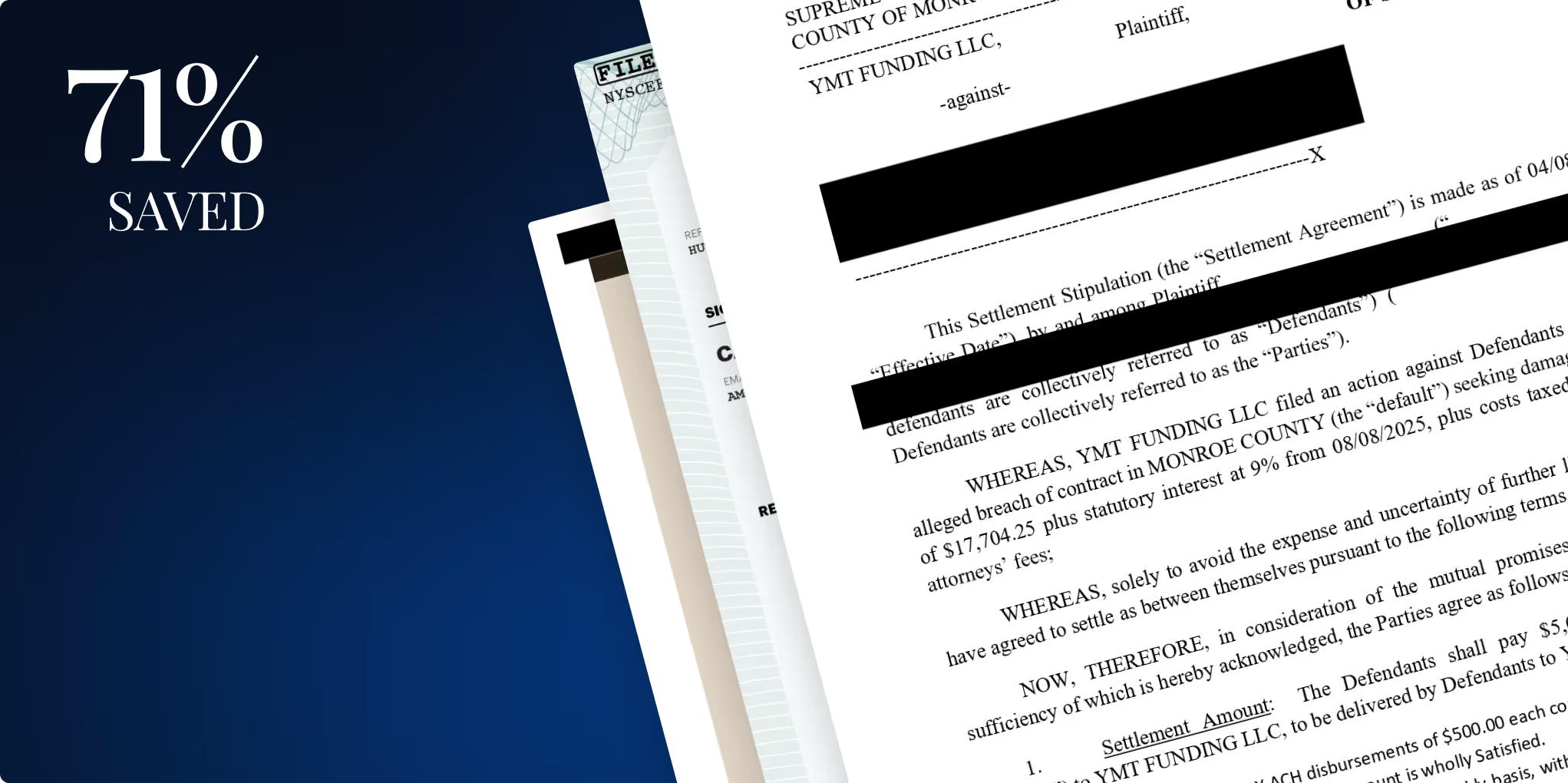
A merchant cash advance lawsuit can put payroll, supplier payments and your own finances under pressure. The immediate task is to establish where the case stands and what response is due. Being served means a creditor has filed a claim; it does not mean the creditor already has a judgment.
First steps after service
- Save the complete court papers. Keep the summons, complaint, attachments, envelope and any emails. Write down when and how they arrived.
- Identify the case and defendants. Note the court, county, index number, plaintiff and every business or personal guarantor named.
- Gather the financial records. Collect signed MCA agreements, amendments, payment history, reconciliation requests, creditor communications and recent cash-flow information.
- Have counsel confirm the deadline and response. Service rules, the documents delivered and case orders can affect what is due and when.
- Keep settlement talks separate from the court deadline. Do not assume a phone call, payment proposal or pending consultation extends the time to respond.
Request an MCA lawsuit case review to discuss your agreements, creditor pressure and next steps. If a deadline is approaching, make that clear when requesting help.
New York response deadlines
CPLR 320 generally requires an appearance within 20 days after service of the summons. For specified service methods, including certain out-of-state service, it provides 30 days after service is complete. These are not universal deadlines for every MCA case.
Ask your attorney to check the summons, complaint, proof of service, service-completion date and any applicable order or extension. When the complaint is not served with the summons, different response steps may apply. The date you first read the papers is not necessarily the date that starts the clock.
An appearance can take different forms under the rule. Counsel should determine whether an Answer, motion or another procedural step is appropriate.
Why MCA lawsuits are filed in New York
Your business can be based in Texas, Georgia or Florida and still face an MCA lawsuit in New York. The agreement may include a clause selecting New York courts to resolve disputes.
Give your attorney the signed agreement as well as the court papers. They can review the jurisdiction and venue clauses and assess whether there are grounds to challenge where the case was filed.
What an Answer protects
An Answer is a court filing that responds to the allegations in the complaint and can raise defenses. A call to the funder or a settlement proposal does not serve that purpose.
Your attorney can review the agreement, payment records, reconciliation requests and service of the lawsuit before deciding what to include. Some objections must be raised in a particular way and on time. Filing an Answer does not automatically preserve every argument.A timely response lets you contest the claim and defend the business while negotiations continue. Resolving the balance and any ongoing collection activity requires a court order or written settlement.
Default judgments and enforcement
The funder may seek a default judgment. Under CPLR 3215, a default judgment still requires the applicable proof and procedure; missing a deadline does not automatically create a judgment.A judgment can include an established balance and applicable fees or costs. Depending on the judgment and enforcement procedure, creditor remedies may include:
- a restraining notice under CPLR section 5222, which freezes business bank accounts
- levies on receivables and merchant processing
- asset seizure through a marshal or sheriff
- enforcement against any personal guarantor on the agreement
- a judgment affecting future financing or business credit evaluations
A restrained business account can prevent you from accessing money needed for payroll and suppliers. If an account has already been restrained, tell your attorney and provide the bank notice.
Options after a default judgment
A default judgment may be challenged in some circumstances. A lawyer can assess whether grounds exist to seek vacatur, including a service defect or an excusable default supported by a potentially meritorious defense. The result depends on the case.
The New York Attorney General's Yellowstone settlement canceled $534 million in merchant debt and required certain judgments to be vacated. It applies to the specified Yellowstone companies, not every MCA creditor. It is not a blanket defense to a new lawsuit.
If a judgment already exists, bring it and the service records to your attorney promptly to review the available options and deadlines
Potential defenses in MCA litigation
A useful review starts with the agreement and the payment history. Depending on those records, an attorney may examine the following issues.
Recharacterization, meaning the advance was really a loan. Courts examine the substance of the transaction, including whether the funder actually bears the risk of reduced receipts. Factors discussed in LG Funding, LLC v. United Senior Properties of Olathe, LLC (2d Dep't 2020) and Fleetwood Services, LLC v. Ram Capital Funding, LLC include:
- Is there a genuine reconciliation provision?
- Is the repayment term genuinely indefinite rather than a fixed schedule?
- Does the funder retain recourse if the merchant declares bankruptcy?
Reconciliation language on paper is not sufficient. Courts have examined whether the mechanism works in practice. Discretionary wording such as "may" instead of "shall," documentation requirements that make reconciliation effectively unavailable, or a flat refusal to reconcile all weigh against the funder. In Davis v. Richmond Capital Group (1st Dep't, May 2021), the court let claims proceed where reconciliation was discretionary and allegedly refused, and where daily payment rates did not appear to be a good-faith estimate of receivables.
If the transaction is treated as a loan, an attorney can assess whether New York's usury laws apply. The borrower, transaction amount and contract terms matter; a high cost alone does not establish a defense.
Improper service. How the papers were delivered matters. Give counsel the envelope, emails and service records so they can check whether service complied with the applicable requirements.
Breach by the funder. Keep evidence of reconciliation requests and the funder's responses. A refusal to follow the agreement or collection conduct inconsistent with its terms may be relevant to your defense.
Disclosure failures. New York's commercial financing disclosure rules require specified disclosures for covered transactions, subject to scope and exemptions. Counsel can assess whether the rules applied to your financing and whether any disclosure issue affects your case.
Counterclaims. If you believe the funder or broker misrepresented the terms or acted improperly, save the supporting messages and documents. Your attorney can assess whether you have a claim of your own.
Negotiating after an MCA lawsuit
You can discuss a settlement while defending the lawsuit. A proposal should address what the business can pay and how the pending case will be resolved. Until an extension or settlement is properly documented, continue working to the court deadline.
For more context, read our guides to merchant cash advance default and collection risks and comparing MCA debt relief options.
Use current revenue, payroll, rent, supplier costs and your other MCA obligations to work out an affordable payment schedule. Before approving an offer, check the total amount, fees, payment dates, treatment of guarantors and what happens to the lawsuit. Have counsel review the written terms.
How Apple Debt Relief helps
Apple Debt Relief provides our New York-licensed attorneys to file Answers within 48 hours and handle the legal response. We negotiate settlements around your business’s cash flow. Settlement funds go directly to creditors, and you approve every offer.
We never collect weekly deposits or hold your money in escrow. There is no upfront enrollment fee. Our performance fee is earned only when we meaningfully improve your outcome; your agreement explains the fee and any separate legal costs.
Request an MCA lawsuit case review or call Apple Debt Relief at (833) 237-0027. Have your court papers and MCA agreements ready so the conversation can focus on your situation.
This guide provides general information about MCA lawsuits and New York court procedures. Your attorney should review your papers and confirm the deadlines and defenses that apply.