If daily or weekly MCA payments are squeezing payroll and operating expenses, the first question is whether you can keep paying while new terms are negotiated. If you have already been served with a lawsuit, responding to the case becomes an immediate priority. Those situations call for different kinds of help.
This guide compares four approaches to merchant cash advance debt: negotiation before default, settlement programs that accumulate funds, attorney-supported negotiation and business bankruptcy. Compare what happens to your payments and money, what the fees cover, and who handles a lawsuit.
Start with payment status and cash flow
Gather each MCA agreement, the current balance, the daily or weekly payment and recent business bank statements. Add any collection notices, summonses or complaints. With multiple MCAs, look at the combined payment burden rather than reviewing each advance in isolation.
A workable proposal needs to leave room for payroll, rent, taxes, inventory and other essential expenses. A smaller payment can help, but check how long it lasts and what the business will pay overall.
MCAs are commonly structured as purchases of future receivables. That label alone does not settle how an agreement will be treated legally. New York courts have considered reconciliation provisions, the repayment term and recourse in bankruptcy when distinguishing an advance from a loan. An attorney must assess the actual agreement and facts; see K9 Bytes v. Arch Capital Funding.
1. Negotiating MCA payments before default
A business that is still paying may be able to seek adjusted payments or other agreed terms before falling behind. The discussion starts with actual cash flow, existing obligations and what the business can sustain. Review any reconciliation or payment-adjustment process in the agreement, including the records the funder requires.
At Apple Debt Relief, pre-default clients do not have to stop paying their funders or build an escrow balance before we begin. We contact creditors and negotiate payments around the business's cash flow. You approve any offer we bring you.
You can seek help while payments are current but becoming difficult to maintain. Existing payment terms remain in effect until the creditor agrees to a change.
For details on our service, visit MCA debt relief before default.
2. Settlement programs that build a fund
MCA debt settlement seeks an agreement to resolve an existing obligation, which may involve a reduced balance, changed payment terms or both. Some settlement programs ask businesses to accumulate money in a dedicated account so it can be used for future offers. A program may also ask you to stop paying creditors. Read the proposed arrangement closely: account ownership, access to funds, provider fees and creditor payments can vary.
Money deposited into that account is not necessarily money paid toward an MCA balance. Ask how much reaches creditors, when offers are expected and what happens to the remaining funds if you leave.
If a program requires stopped payments, understand the default and collection risks before enrolling. Building a settlement fund does not pause a lawsuit. Confirm whether legal representation is included, who would provide it and what it costs separately.
3. Attorney support with creditor negotiation
An attorney reviews court papers, response deadlines, contract terms and possible defenses. Negotiations can continue while the attorney handles the lawsuit.
Responding to the lawsuit keeps your legal defense moving while settlement talks continue. Ask how motions, hearings and enforcement issues will be handled as the case develops.
Confirm who will negotiate offers, where settlement payments go and whether you approve the terms before acceptance. Attorney fees and a negotiation provider's performance fee may be separate.
If you have been served in New York, use our MCA lawsuit response guide to organize your documents and prepare for an attorney's review. Response deadlines depend on the case and service details; do not assume negotiation extends them.
4. Business bankruptcy
Bankruptcy is a formal legal option when a business needs a broader restructuring or cannot support a negotiated resolution. Chapter 11 can allow a business to continue operating while proposing a repayment plan, subject to the bankruptcy process. It should be evaluated with bankruptcy counsel.
A bankruptcy filing generally triggers an automatic stay of many collection actions against the debtor, with exceptions and the possibility of court-ordered relief from the stay. Costs, reporting requirements and the treatment of assets, liens and personal guarantees need individual review.
Do not assume bankruptcy means immediately closing the business, or that it resolves every obligation connected to its owners. The appropriate chapter and available protections depend on the circumstances. The U.S. Courts' Chapter 11 overview explains reorganization and the automatic stay.
Comparison at a glance
Compare the written terms of a specific service against these points. Pre-default negotiation and attorney support may be used together as a business's situation changes.
For any quote, separate the provider's fee from money paid to creditors and from legal costs. Ask what event makes a fee due, how it is calculated and what you owe if an offer is declined or a matter remains unresolved.
Consolidation and refinancing
“MCA consolidation” can describe very different arrangements. One may provide new financing to pay existing funders; another may combine deposits into a settlement program. A single payment is not enough to tell you which service is being offered.
Ask whether you are taking on a new financing agreement or negotiating existing obligations. For new financing, compare the total amount payable, payment frequency, term, fees and any guarantees or collateral. A lower weekly payment may come with a longer term or higher overall cost.
Apple Debt Relief negotiates with creditors and provides an attorney for legal matters. Our pre-default service does not require a new loan.
Evaluating MCA debt relief companies
To find the best MCA debt relief company for your business, compare services against your payment status, cash flow and legal needs. Look at the written terms and documented work, rather than a promised reduction alone.
When reading MCA debt relief reviews, look for accounts that describe communication, fees, creditor agreements and follow-through. Check which business the profile belongs to and whether the reviewer describes a situation similar to yours. Reviews help you assess service, but they do not establish what a creditor will accept in your case.
Ask for redacted settlement documents and clear business contact details. A written agreement should explain the service, who performs it, cancellation terms and all costs. Use these six questions in a consultation:
- Will I be required to stop paying? Get a clear explanation of the payment plan and what happens if a creditor declines proposed changes.
- Where will my money go? Identify who controls any account, when creditors receive funds and what happens to unused money if you leave.
- When are fees earned and due? Ask for the calculation, performance conditions, separate legal costs and cancellation terms in writing.
- Who handles a lawsuit? Confirm the attorney, engagement scope and process for reviewing deadlines. A negotiation service alone does not establish legal representation.
- Do I approve each offer? Review the balance, payment schedule, releases, fees and any continuing obligations before accepting.
- Can I verify the company's work? Review documented examples, official business profiles and client feedback. Ask how comparable results relate to your circumstances.
If payments have already stopped, our merchant cash advance default guide explains the collection and lawsuit issues to review. Keep court deadlines separate from any settlement discussions.
How Apple Debt Relief approaches MCA debt
Apple Debt Relief negotiates MCA debt around your cash flow and provides our attorney for legal matters. We do not require stopped payments for pre-default clients, and we never collect weekly deposits. Agreed settlement payments go directly to creditors. You approve every offer.
Our fee is performance based: we earn it only when we meaningfully improve your outcome. There is no upfront enrollment fee. Your agreement explains when our fee becomes due and any separate legal costs.
If proposed terms are not enough, we help prepare the business for default with our attorney and asset-protection planning.
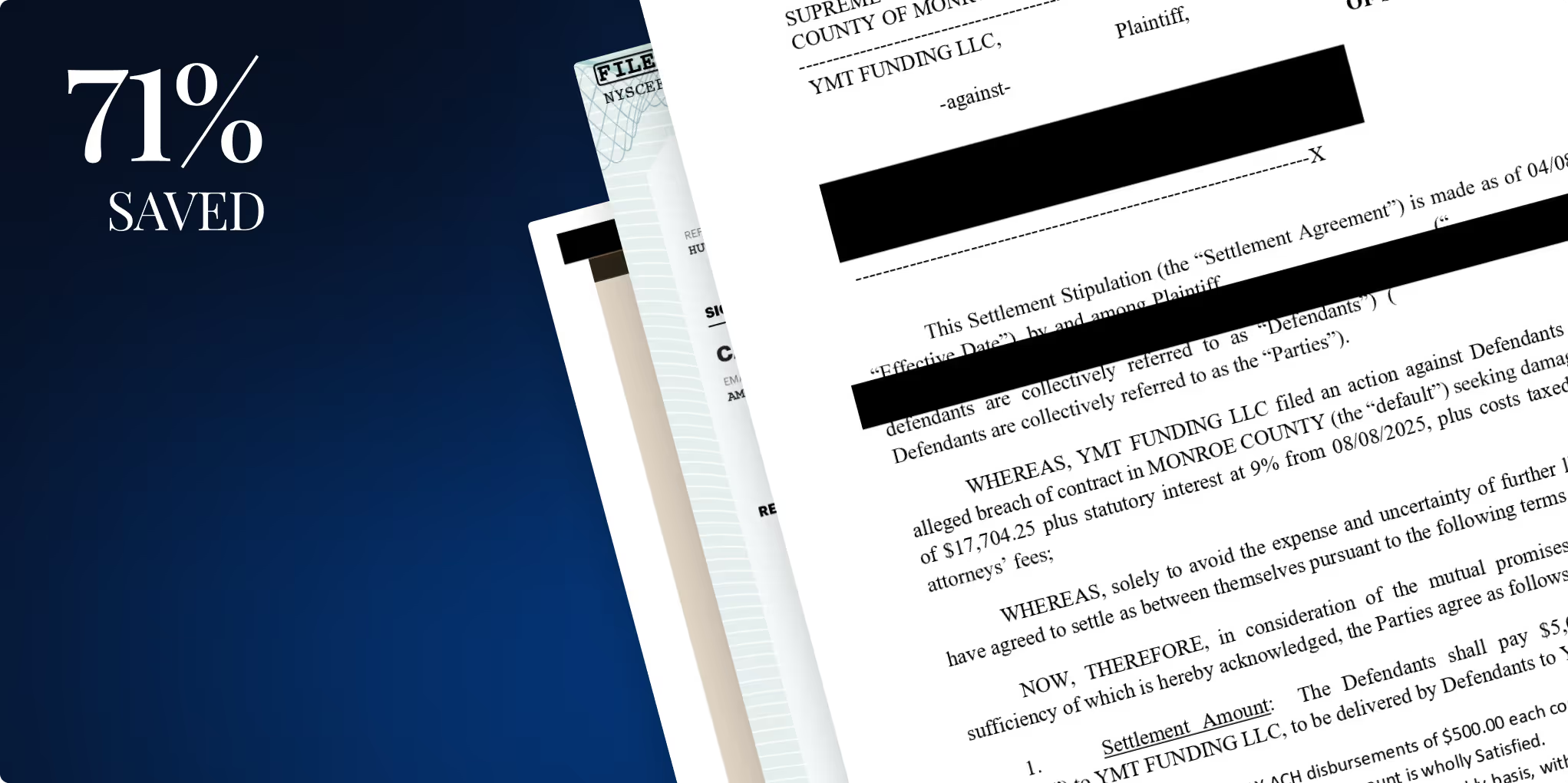
Our documented settlement examples include a $100,112 balance resolved for a $52,500 lump-sum payment, as well as payment-plan resolutions. These are individual outcomes, not a prediction for another business. Learn more about our approach and official profiles on About Apple Debt Relief.
Request a free MCA case review to discuss current payments, creditor pressure or an active lawsuit. Have your agreements, payment figures and any court papers ready.
This guide provides general information about commercial debt options. Legal and bankruptcy decisions require advice from a licensed attorney about your specific situation.